Vintage Kitchen Clipart Set
First Impression: Whimsy That Stitches Cleanly
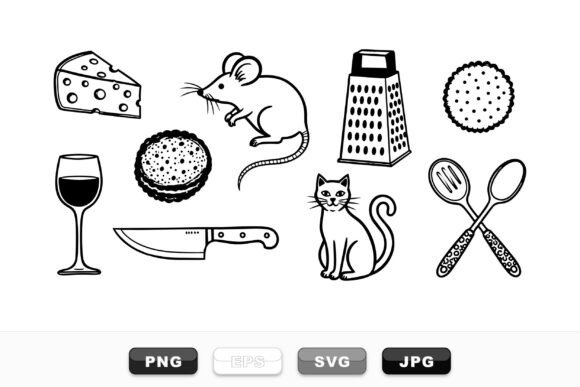
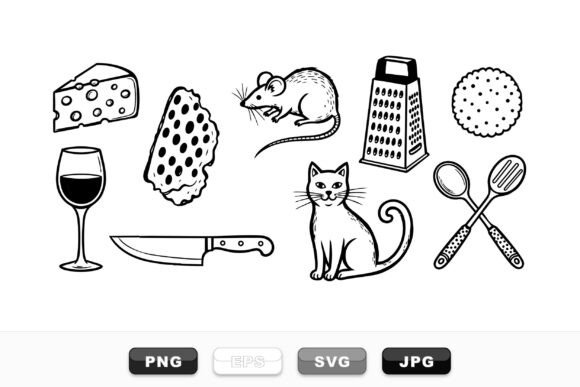
Unzipping the Vintage Kitchen Clipart Set feels like opening a well-loved recipe box—slightly nostalgic, quietly charming, and instantly usable. The black-and-white line art delivers exactly what the title promises: a cohesive kitchen theme with cheese, wine glass, mouse, cat, grater, knife, crackers, and utensils—all drawn with light, confident strokes and gentle irregularity. There’s no forced cuteness or over-rendered detail. Instead, it leans into its simplicity: clean outlines, open shapes, and intentional negative space. That’s not just aesthetically pleasing—it’s embroidery-friendly by design. As someone who’s stitched hundreds of client projects—from boutique aprons to personalized baby onesies—I immediately saw how this set would translate to thread without fuss.
A Real Project Test: Embroidering a Linen Tea Towel for a Local Kitchen Shop
Last week, I used one of the smaller motifs—the cheese wedge—to embroider a 6” x 8” linen tea towel for a small-batch kitchen shop in Portland. We chose natural linen (medium weight, slightly textured) and matte cotton thread in warm cream and soft taupe. The result? Crisp, legible, and undeniably handmade—not “digitally perfect,” but authentically tactile. Customers noticed it right away. One told me, “It looks like something my grandma would’ve sketched on a flour sack.” That’s the mood working: whimsical but grounded, playful but not childish. The Vintage Kitchen Clipart Set doesn’t shout; it invites closer looking—and that makes it ideal for products where charm lives in the details: embroidered pillow covers for a farmhouse Airbnb, custom sweatshirt patches for a food truck crew, or baby bibs with a tiny cat motif tucked near the shoulder strap.
Where It Shines—and Where You’ll Want to Pause
This set excels in medium-to-large-scale applications: tote bag corners, apron pockets, pillow centerpieces, and tea towel hems. Its open-line structure means low stitch density—no heavy fill stitches or dense satin borders to overwhelm lightweight fabrics or cause puckering. That’s a huge win for custom apparel, especially on cotton-blend sweatshirts or relaxed-fit tees where stiffness kills comfort.
But here’s where practical judgment kicks in: avoid using the full multi-element scene on anything under a 4” hoop. The mouse + cheese + cracker grouping is delightful as a standalone graphic—but too busy for a cap front or baby onesie chest placement. Likewise, the fine whisk or grater lines may blur on highly textured fabrics (like bouclé or thick terry) or stretchy knits unless stabilized properly. On dark fabric, test contrast early: black thread on navy works beautifully, but pale gray thread on charcoal can vanish. And while the line art translates cleanly to applique, don’t assume it’s optimized for reverse applique or intricate needle-turn—this is a machine embroidery design first, not a hand-embroidery chart.
What Buyers—and Your Business—Will Actually Respond To
Customers don’t buy clipart. They buy feeling. The Vintage Kitchen Clipart Set delivers warmth, approachability, and quiet craftsmanship—qualities that elevate a plain tote into a gift-worthy item or turn a generic sweatshirt into a signature piece for your Etsy shop. I’ve watched buyers linger longer on listings featuring this kind of illustrated charm: it reads as intentional, not algorithmic. That builds trust. It also supports brand consistency—if you sell handmade kitchen goods, this set helps unify your product photography, packaging stickers, and embroidered items under one visual language.
For craft businesses, that cohesion matters. A café owner ordering custom staff aprons with the cat + wine glass motif? She’s not just buying embroidery files—she’s investing in a recognizable, repeatable aesthetic. And because the set includes varied elements (utensils, animals, food), you can mix and match across product lines without repeating the same layout—keeping your shop fresh and scalable.
Designer Notes You’ll Thank Yourself For Later
- Always test on scrap fabric first—especially with textured or dark linens. See how those fine lines hold up after washing.
- Review stitch density before hooping. These are low-density designs, but if your machine defaults to high-density fills, adjust settings manually.
- Confirm hoop size compatibility. The larger groupings may need a 5”x7” hoop; don’t assume they’ll scale down cleanly to 4” without losing clarity.
- Inspect small details at actual stitch size: the mouse’s tail, the cat’s ear tip, the grater’s holes—do they read when stitched? Zoom in on your embroidery software preview.
- Test black-and-white mockups on both light and dark backgrounds. This set’s strength is its monochrome flexibility—but only if contrast stays legible.
- Use appropriate stabilizer: medium-weight tear-away for stable wovens, cut-away for knits or lightweight cottons.
- Check licensing terms before selling finished items. Since this is a digital embroidery file sold as Graphics in the Crafts category, confirm whether commercial use (e.g., embroidered patches for resale) is permitted.
Final Thought: Not Just Clipart—A Design Partner
The Vintage Kitchen Clipart Set isn’t flashy. It won’t dominate a tradeshow booth with neon saturation or hyper-realism. But it’s the kind of design that earns repeat customers, shows up thoughtfully in holiday gift guides, and holds up beautifully after dozens of washes on a favorite kitchen towel. It respects the craft: simple enough to stitch reliably, expressive enough to feel personal, and versatile enough to grow with your business—from your first Etsy listing to your fifth wholesale order. If you’re choosing embroidery assets for real-world making—not just digital display—this set earns its place in your library. Just remember: let the whimsy guide the placement, not the other way around.